

By Valentine Obienyem
Yesterday, I was at the University of Lagos to represent Mr. Peter Obi at the valedictory lecture of Prof. Uchenna Nkiruka Udeani. It soon became apparent as confirmed by the Church Assistant at the Chapel of Christ Our Light, that the officiating minister deliberately avoided acknowledging Mr. Obi’s presence through me. Once I grasped the little drama at play, I could not help but smile. Ironically, His Excellency often prefers not to be publicly recognised; yet, whenever his presence is announced, it almost invariably elevates the occasion and is warmly appreciated by the celebrant.

As I smiled at what could only be described as ministerial pettiness that sometimes prompts anticlericalism, Akachaam came to mind. There are people who, often out of ignorance rather than conviction, quietly stoke the fires of anticlericalism. Akachaam came readily to mind because he is, quite plainly, an anticlericalist – for reasons best known to him alone.
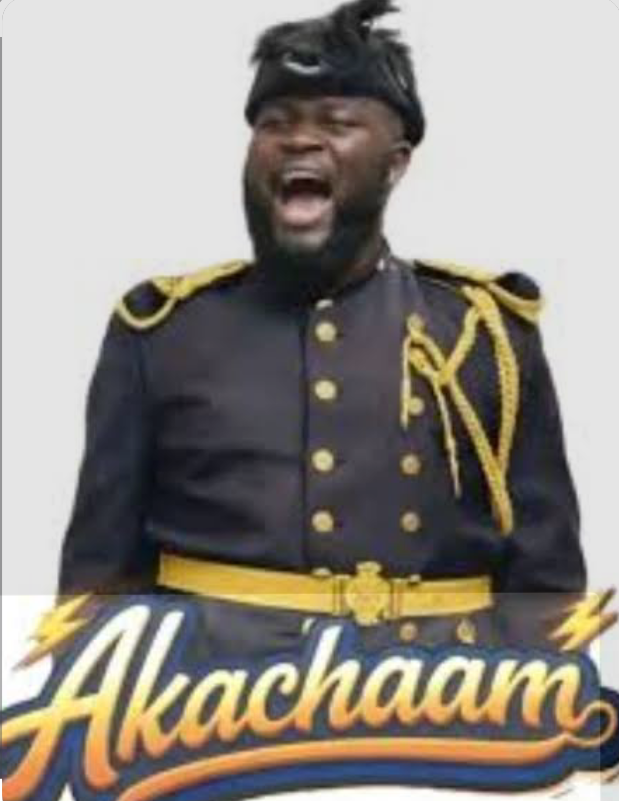
Many people fail to recognize that Mr. James Okoye, popularly known as Akachaam, harbours a strong anticlerical sentiment. He is not alone; this disposition is increasingly widespread. It manifests in what we call a back-to-roots movement built on monumental ignorance. They crazily magnify the failings of certain priests and weaponize them against the Church as a whole, turning legitimate criticism into generalized hostility. When, for example, a story of a promiscuous priest is raised, they take it to the market, igniting attacks against many priests whom no force has distracted from their vows of celibacy.
Throughout history, crude anticlericalism frequently grows out of historical amnesia. It amplifies clerical faults while ignoring the indispensable role religious institutions have played across centuries: preserving learning, providing education and charity, stabilizing societies, and transmitting law and culture in times of collapse and uncertainty.
At the same time, honesty demands acknowledgment that some contemporary priests contribute to this perception – or what can be called unbelief among the faithless – through lapses in priestly discipline and commitment. They remind us of the days of Bishop Donatus Magnus. Yet it remains unjust to indict an entire institution for the shortcomings of a few.
Going by the nature of development and the unusual exposure to vices, let us agree that the misplacement of values will certainly become many times magnified. History teaches that no institution rises above the moral level of the society that produces it. The priests and religious orders of earlier generations were formed in a different cultural milieu from that of today. Thus, however stringent the formation of priests may be, the truth is that they still live in the society of men, susceptible to the geometry of its operations.
This reality was captured in a conversation I once had with my first rector, Msgr. Jeremiah Ikegbusi. He was my mother’s classmate and, as such, although formation demands treating everybody equally, he had a soft spot for me. I remember that it was with him that we had our first Latin class. He entered the class with an air of one who was about to impart some esoteric knowledge on us. With cheeks bursting with the pride of one who knows Latin, he wrote on the board: “Latina Lingua.”
I also recall a discussion I had with him when he was posted to the seminary as Spiritual Director some years back. In response to my question about general state of affairs, he lamented that in our own halcyon days, “mgbe enu bu ani osa”, when we learnt how to brush our teeth even before weaning, that candidates for the priesthood arrived better guided by their families and more substantially formed before entering the seminary. Today, many children are poorly prepared, with parents delegating even basic formation to the seminary, to the extent that some of them do not even know how to wash their clothes nor brush teeth. Such over-pampering encourages effeminate degeneracy. At all times, formation in the seminary is top-notch; yet there is a general degradation in society such that priests, though well formed, are not entirely immune to the wider moral and cultural decay that surrounds them. When this unavoidable human fragility is exaggerated, isolated, or maliciously interpreted, it becomes fertile ground for distorted narratives and reckless accusations.
It is within this climate that figures like Mr. James Louis Okoye exemplify a modern anticlerical temperament, often without appreciating its dangers. Akachaam has gone so far as to accuse priests in Nnewi of murder, alleging that one Rev. Fr. Nwagbara was killed and his house burned. The sole basis for these grave accusations is his claim that a priest who appears to him in dreams through spiritual séances revealed it to him. What incautious madness! That such serious allegations circulate without formal interrogation raises troubling questions about responsibility and restraint in public discourse.
A closer look suggests that Akachaam’s hostility is not directed primarily at Bishop Jonas Benson Okoye as a person, but at his appointment as Bishop of Nnewi. Let no madman take us back to the Ahiara madness. This selective opposition is telling, especially since there is no evident widespread dissatisfaction among Nnewi priests themselves, who understand the unity and universality of the Church. Bishop Jonas Benson Okoye’s tenure in Nnewi has been marked by diligence and productivity, yet he remains a focal point for inflamed anticlerical sentiment and deliberate distrust by Mr. Akachaam. But at the same time, Akachaam is an agent of the call for reappraisal of the institution of knighthood. I heard he was a knight!
In a related development, I read reports that some priests have visited Mr. Okoye. While pastoral concern rightly seeks the recovery of the “lost sheep,” such interventions demand prudence. Even setting canon law aside, simple common sense raises a question: is it wise for priests to visit someone publicly insulting their bishop without informing diocesan authority- assuming that was the case? Had the bishop been aware, he would almost certainly have assigned a priest to accompany them. In volatile situations, pastoral charity must walk hand in hand with order, lest goodwill be mistaken for endorsement, weakness, or content creation, especially given the manner of its publication.
Ultimately, anticlericalism rooted in exaggeration, personal grievance, or ideological hostility does not purify the Church; it corrodes trust and distorts truth. The Church must continually reform itself (Ecclesia semper reformanda) and confront genuine clerical failures with honesty and discipline. But reform grounded in truth is fundamentally different from campaigns fueled by suspicion, sensationalism, or undue accusations hiding under recognition – or the lack thereof – of Sen. Ifeanyi Uba. When criticism abandons reason and charity, it ceases to be corrective and becomes destructive. Only by resisting such crude anticlericalism and by insisting on measured judgment, historical awareness, and pastoral prudence, can both the Church and society preserve their moral and institutional integrity.