


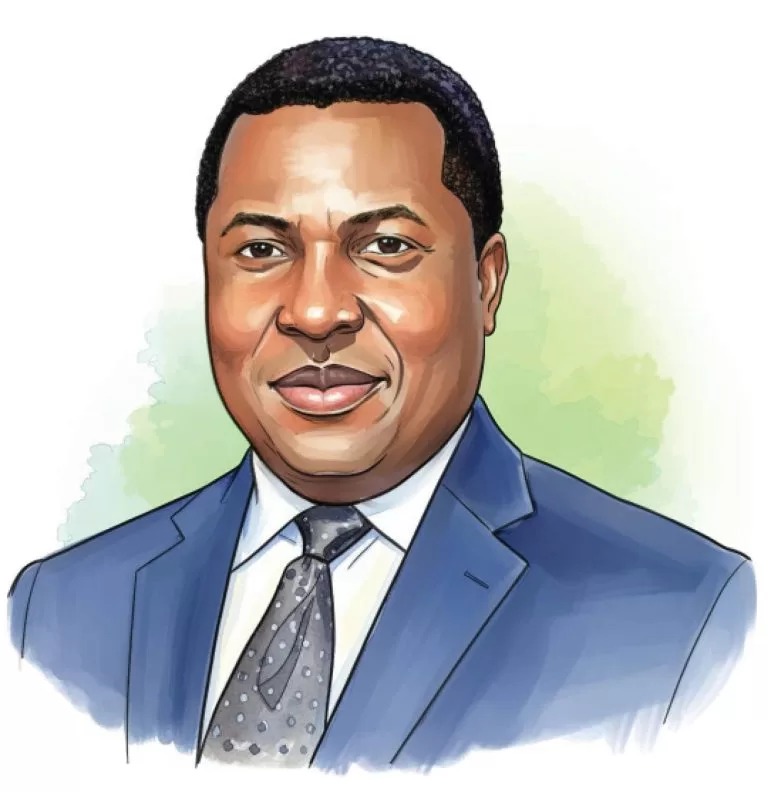
The Chairman of the Independent National Electoral Commission (INEC), Prof. Joash Ojo Amupitan, SAN, has said despite the improved electoral system occasioned by the use of the Bimodal Voter Accreditation System (BVAS) technology, network limitations during the upload on the INEC Result Viewing (IReV) portal remained a major challenge.
He also urged civil society organisations, community leaders, the media and citizens across the country to support the Commission as it commenced claims and objections for the first phase of the Continuous Voter Registration (CVR) on December 15.
Prof. Amupitan stated this in Abuja Thursday at the Nigeria Civil Society Situation Room’s Stakeholders’ Forum on Elections.

He delivered an extensive and soul-searching address on the state of the nation’s democracy, the challenges of election management, and the critical roles played by CSOs, political actors, security agencies, and citizens.
The INEC boss, barely two months in office and attending the forum on a day originally slated for the Commission’s weekly meeting, said he considered his presence a duty to the nation.
*Election integrity
Speaking on the integrity of elections, the INEC boss admitted that the Commission’s adoption of technology, including the BVAS and the IReV portal, had transformed electoral transparency.
BVAS, he said, had shut the door to over-voting and manual manipulation while IReV had thrown open the results collation process for public scrutiny in real time.
Yet, he cautioned that “technology is not a silver bullet,” explaining that “network limitations across 176,000 polling units continue to hamper real-time uploads.”
Recalling the Commission’s mock accreditation in Anambra, he cited instances where accreditation data failed to reflect instantly due to poor connectivity, as well as cases where trained presiding officers struggled with uploads on the field.
He stated that the Commission was engaging telecom providers and the Nigeria Communications Commission (NCC) to resolve these weaknesses while exploring alternative technologies and redundancies.
He added that INEC looks forward to a future where it can control its own network infrastructure instead of relying wholly on external service providers.
He warned that Nigeria’s democracy cannot gain credibility or maturity if the national voters’ register remains filled with the names of people who have died, moved, or are otherwise ineligible.
*On upcoming phase of claims and objections
He emphasised that the upcoming phase of Claims and Objections was decisive for strengthening the integrity of Nigeria’s voters’ register, describing it as “a task the Commission cannot accomplish alone.”
Amupitan said the public must help identify names that should be removed, errors that require correction, and omissions that needed to be fixed.
“If we cannot clean up our register, we cannot claim credibility. We need CSOs, community leaders, and the Media to mobilize Nigerians to examine the lists. INEC cannot do it alone,” he said.
Amupitan explained that Phase 1 of the CVR, which began on 18 August and concluded on December 10, recorded a nationwide total of 2,685,725 registrations.
Of this figure, he said, 1,576,137 completed their registration online, while 1,109,588 completed the process through physical capture.
He praised the rising political awareness reflected in the numbers, noting that states such as Osun, Kano, Sokoto, Imo, Borno, and Lagos are leading the pack in registration turnout.
To further deepen inclusivity and ease access, the Commission will begin Phase 2 of the registration exercise on January 5, 2026, relocating many registration centres closer to registration areas and hard-to-reach communities.
He said this decision emerged from field assessments showing that distance and poor accessibility hindered turnout in many locations.
*FCT Area Council poll
Amupitan also detailed the Commission’s preparations for the FCT Area Council election scheduled for February 21, 2026, describing it as one of the Commission’s most sensitive assignments because INEC is solely responsible for local government–level elections in the FCT.
He noted that all information and timelines were already available on the Commission’s platforms and that further discussions on logistics and security will continue.
*Election security, technologies, others
The INEC chairman’s address moved seamlessly from security concerns to democratic culture, from technology to voter turnout, and from legal frameworks to political accountability.
He warned that although insecurity remains a troubling threat, panic must not dictate national reactions.
Instead, he said, stakeholders must confront emerging risks with calm minds and collaborative strategies.
Reflecting on Nigeria’s democratic growth, he lamented the persistent reference to the nation’s democracy as “nascent,” despite over two decades of uninterrupted civilian rule.
He questioned when Nigeria would begin to lead by example on the continent rather than merely claim the title of Africa’s largest democracy without backing it with performance.
The INEC boss described democracy as a cultural system, not an imported ideology, noting that Nigeria must adapt democratic values to its social realities rather than copy foreign systems wholesale without contextual relevance.
*Voter apathy
Turning to the challenge of voter apathy, Amupitan described low turnout as a threat to democratic legitimacy.
With less than 22% of registered voters participating in some elections and only 27% turnout in the 2023 general election, he stressed that Nigeria cannot build a strong democracy on a foundation of widespread disengagement.
He cited the bold steps taken during the recent Anambra governorship election, where he directed a five-day extension of PVC collection, including weekend days, despite the risk of logistical strain.
“The result was dramatic: PVC collection jumped to 98.8%, and voter turnout doubled from the previous cycle. He called it evidence that strategic interventions, backed by data and collaboration, can rekindle voter participation,” he said.
Amupitan also delved into the notorious problem of vote-buying, which he described as one of the most corrosive threats to Nigeria’s democracy.
He disclosed that political actors openly admitted to vote-trading practices during pre-election engagements in Anambra, and that some arrests were made.
According to him, INEC had written to law enforcement agencies, including the Police and the Economic and Financial Crimes Commission (EFCC), requesting reports and actions on the cases, emphasising that INEC has the power to prosecute but not to arrest.
He noted that credible elections require collaboration, not suspicion, between all actors.
In his view, security agencies, civil society organizations, the media, political parties, and INEC must jointly sustain public trust in the electoral process.
The INEC boss reminded the audience that “democracy is neither an event nor a seasonal exercise; it is a lifelong process that must become part of Nigeria’s cultural identity.”
Citing Kofi Annan and Jim Kator, he said “democracy and citizenship are learned and nurtured over decades, not inherited or imposed.”
He urged the nation to rebuild trust, renew civic spirit, and anchor the electoral system on integrity.
As he wrapped up, the INEC boss returned to the heart of his message: that the Claims and Objections period beginning December 15 is a critical window for Nigerians to strengthen the foundation of future elections.
With the second phase of CVR beginning on January 5 and the FCT Area Council election approaching, he said the time for citizens to take responsibility is now.
“We must all join hands,” he declared, adding: “INEC is doing its part, but democracy cannot thrive if the people themselves do not protect and purify the process. Let us seize this opportunity to clean our register, strengthen our elections, and continue the journey toward the democracy we all desire.”